
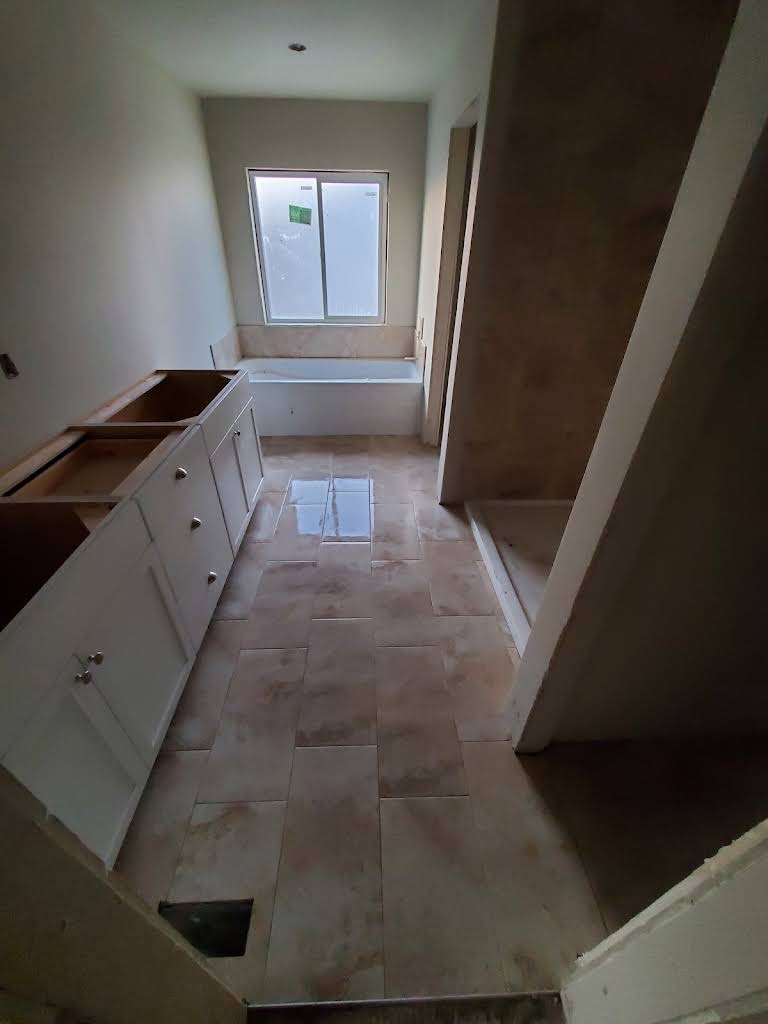
Installing new floor tile over an existing tile floor is sometimes possible, and it can reduce the mess and labor of removing the old floor. But it is not a shortcut that works in every situation. Whether an overlay is sound depends on the condition of the existing floor, the height it adds, and what is underneath.
The right question is not whether tile over tile is allowed, but whether your specific floor is a candidate for it. A few assessments before work starts tell you whether an overlay is a real option or whether removing the old tile is the safer path.
When an Overlay Can Work
An overlay can work when the existing tile is well bonded, flat, and free of cracks, loose tiles, and movement. The old floor has to act as a stable base, because the new tile will follow whatever the old floor does. If the existing tile is shifting or hollow, the new tile on top will shift too.
Mortar compatibility also matters. The setting material used over an existing tile floor has to be appropriate for going over tile, and the existing surface may need preparation so the new mortar bonds. These are decisions for the installer based on the actual floor, not a universal rule. A hollow sound when tapping a tile does not by itself prove the floor is failing; the existing bond and substrate condition both need assessment before an overlay is chosen.
Height and What It Affects
Adding a second layer of tile and mortar raises the floor, and that height affects everything around it. Transitions to neighboring rooms, door clearance, threshold strips, and built in appliances like dishwashers can all be affected. The total added height depends on the tile, mortar, and system selected and must be measured before work begins.
Before choosing an overlay, check the height it would add against your doorways, transitions, and appliances. A floor that is technically tileable over the old one can become impractical once the height creates problems at every edge.
What to Ask About the Existing Floor
Ask whether the existing tile is well bonded across the whole floor or whether there are loose, cracked, or hollow areas. Ask what is known about the substrate underneath, because an unknown condition under the old tile can affect the new installation even if the surface looks fine.
It is also worth asking what the estimate includes if the old floor turns out not to be a suitable base. A scope that covers both the overlay path and the removal path keeps the estimate honest if the condition on the floor changes the plan.
Removal and Dust Considerations
Removing old tile creates dust and debris, and some older floors may involve materials that need professional assessment before grinding or sanding. This is not a do it yourself demolition decision, and harmful dust can require professional assessment and handling.
If removal is the safer path, ask how the dust and debris will be managed and what the preparation includes. The right choice between overlay and removal depends on the floor, and the estimate should reflect the path that actually fits your situation rather than the one that sounds easier.
Tell us about your existing floor and the room you want retiled. We will review the scope with you and prepare a project quote.