
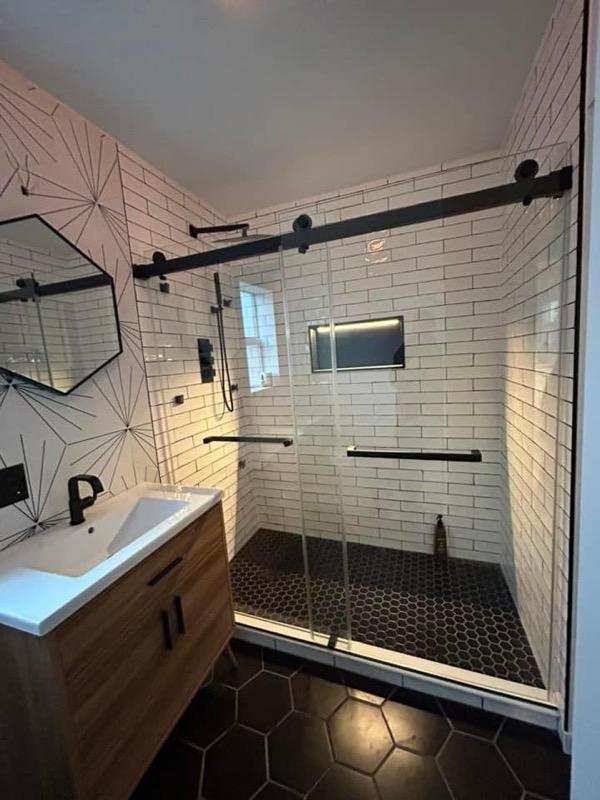
Porcelain and ceramic are two of the most common bathroom tile choices, and the names get used loosely. The practical difference comes down to water absorption and how a specific product is rated for the surface you want to tile. Choosing well means looking past the label at what the tile is actually made and rated to do.
A tile that works on a bathroom wall is not always rated for a wet floor, and a porcelain tile is not automatically slip proof. Comparing the room, the surface, the finish, and the installation scope helps you choose a tile that fits the bathroom rather than one that simply looks right in a sample.
The Real Difference: Water Absorption
Porcelain is a subtype of ceramic tile. Porcelain meets a water absorption rate of 0.5 percent or less, but absorption is only one property. Manufacturer intended-use guidance, the surface finish, and the installation system together determine whether a tile suits a specific surface.
That lower absorption makes porcelain a frequent choice for shower floors and high traffic bathroom floors, but it is not a guarantee on its own. A product still needs to be rated for the surface and the wetness level you have in mind, and the finish affects how it performs and how it looks once installed.
Area of Use Matters More Than the Name
Tile products carry ratings for where they can be used, including walls, floors, and wet areas. A wall tile is not automatically floor rated, and a floor rated tile is not automatically right for a shower pan. The rating tells you whether the tile can take the load, the water, and the wear for that spot.
Reading the area of use for the specific product keeps you from choosing a tile that looks good but is not made for the surface. It also helps you compare options on the same basis when one product is labeled porcelain and another ceramic but both are rated for your floor.
Finish, Glaze, and How It Looks in the Room
The finish and glaze change how a tile handles water, shows dirt, and reads under your bathroom lighting. A glossy wall tile can look different in the room than it does under store lights, and a matte floor tile can read darker or lighter depending on the surface behind it.
Bringing samples home and viewing them in the actual bathroom light, against your fixtures and paint, is a more honest comparison than choosing from a display. It also lets you see how the finish will look next to the grout color you are considering.
Installation Scope and Your Budget
The tile choice affects the installation scope. A heavier or denser tile, a larger format, or a wet area application can mean more substrate preparation and more careful layout work. Two tiles that look similar can have different installation requirements that show up in the estimate.
Comparing estimates on scope rather than on the tile name alone helps you see what each quote includes. Without fixed prices here, the useful question is which tile fits the surface and the room, and what preparation that choice requires before the tile is set.
Tell us which bathroom surface you are tiling and the look you want. We will review the scope with you and prepare a project quote.