
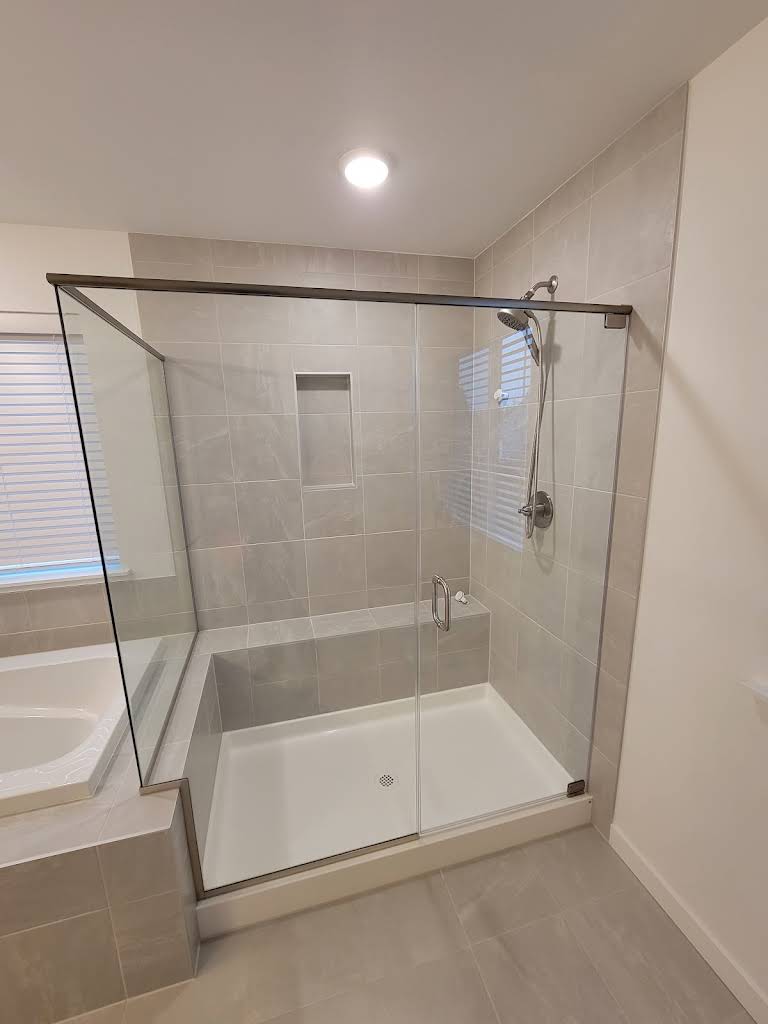
A finished tiled shower looks like one solid, waterproof surface, but the tile and grout you see are really a decorative finish. The waterproofing happens behind the tile, in a separate layer that manages the water before it ever reaches the wall. Understanding that distinction helps you plan a shower that holds up and ask the right questions before work starts.
Homeowners often assume grout or the tile itself stops water, or that a regrout will fix a leaking shower. In most modern shower assemblies the visible tile is the last layer, not the waterproof one. Knowing what sits behind it, and whether your existing assembly is sound, changes whether a refresh is enough or a larger scope is needed.
Why Tile and Grout Are Not the Waterproof Layer
Tile and grout are a decorative finish, not a waterproof barrier. Tile is porous to varying degrees, and grout joints are not a continuous seal, so water that reaches a shower wall can move through grout lines, around corners, and at penetrations. A waterproofing membrane behind the tile is what manages that water. The membrane forms the actual barrier and is detailed at the seams, corners, penetrations, and the drain connection so water is directed to the drain rather than into the wall. A compatible system across its parts is what keeps the assembly working as intended.
Questions to Ask Before Retiling a Shower
Before new tile goes over a shower wall, it helps to understand what is behind the existing finish. Ask whether the current waterproofing is intact, whether there is visible damage or a history of leaks, and whether the existing assembly meets a current waterproofing method. A surface that looks fine from the outside can hide a wall that has already taken on water.
It is also worth asking how the scope changes if the existing assembly is not sound. Retiling over a failed waterproofing layer means the new tile will face the same problem. A refresh that starts as a tile replacement can grow into replacing the membrane and the drain connection once the wall is opened and the real condition is visible.
When Regrout Alone Is Not Enough
Regrouting can refresh the look of grout lines and address surface staining, but it does not repair a waterproofing layer that has failed or was never installed correctly. If water is getting past the tile, new grout on top will not redirect it to the drain.
Loose tile, recurring cracks in the grout, a soft wall, or water appearing outside the shower can have several causes and warrant an assessment rather than another regrout or a stronger cleaner. Identifying whether the issue is the finish, the grout, or something behind or under the surface is what guides the right next step.
What to Document and Request for Your Project
Ask your installer which waterproofing method will be used, how the corners and penetrations are detailed, and how the drain connection is handled. Request that the scope covers the assembly behind the tile, not just the finish, and ask what happens if the existing wall shows damage once it is opened.
Keeping a record of the method and the products used helps with future maintenance and any warranty questions. A clear scope before work starts is what lets you compare estimates on the same basis instead of on tile appearance alone.
Tell us which shower you are retiling and what you want tiled. We will review the scope with you and prepare a project quote.